
Black Friday lands on November 27 in 2026, and the ads already filling inboxes treat the name as a cheerful promise.
Ask around the Thanksgiving table and someone will explain it with confidence. Stores lose money most of the year, the story goes, until the day after Thanksgiving pushes their books from red ink into black.
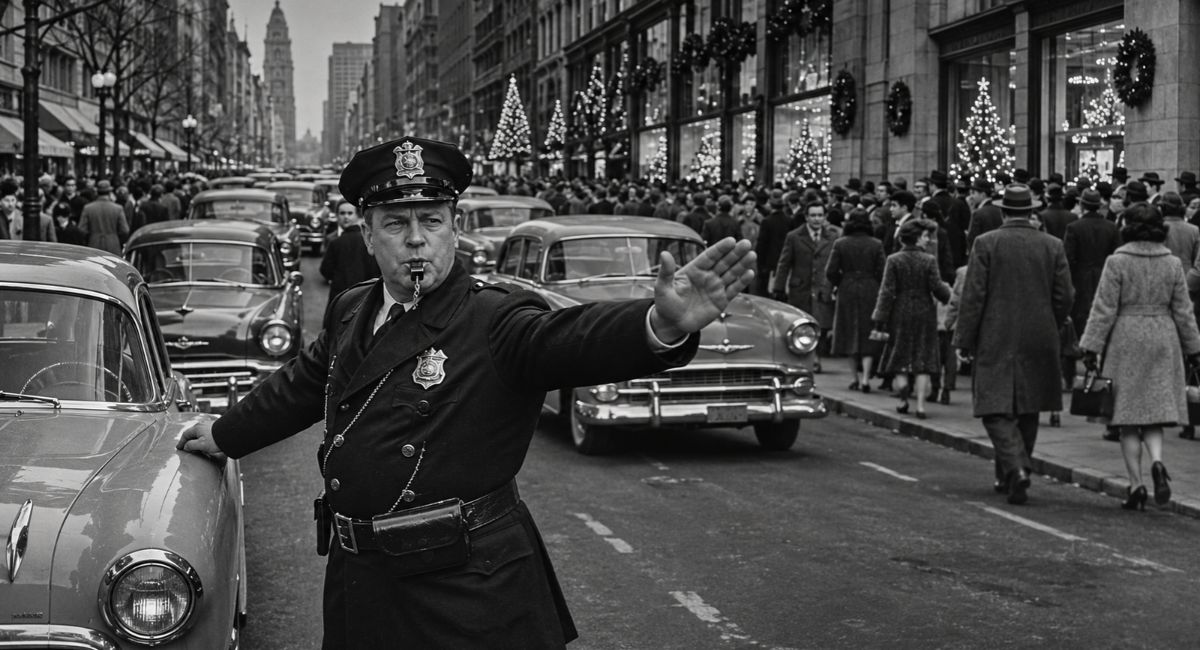
The dated record tells a different story. By 1960, Philadelphia police were using “Black Friday” for the traffic jams, packed sidewalks and overtime that followed Thanksgiving.
Retailers disliked the name, tried to replace it, and only later attached the profitable meaning most people repeat today.
The Ledger Story Sounds Right, Which Is Why It Spread
The accounting explanation deserves a fair hearing. Bookkeepers once recorded losses in red ink and profits in black, so “in the black” still means profitable. A day that rescues the annual numbers seems a natural fit.
Timing is the trouble. No known source from the early 1960s explains the name that way, and the ledger version reaches print years after police and reporters were already using the term.
What is folk etymology?
Folk etymology is a popular explanation for the origin of a word or phrase that sounds logical but is not supported by dated evidence.
Black Friday is a clean example. The ink story describes how retailers wanted the day to feel, not how the name began. The Thanksgiving table holds another one, and we have explained why a turkey is named after a country it never came from.
Black Friday Meant Trouble Long Before It Meant Shopping
The phrase was already old when Philadelphia police picked it up. Calling a disastrous day “black” has a long history in English, and Americans pinned it on Fridays long before any doorbuster sale.
Neither involved shoppers. Both carried the gloomy sense that police later borrowed.
What Philadelphia Police Were Complaining About
On the Friday after Thanksgiving, suburban shoppers poured into downtown Philadelphia for the opening of the Christmas season.
The same weekend brought crowds for the Army-Navy football game, which the city hosted in that era, as Billy Penn has explained.
For officers, the result was gridlock, crowded sidewalks and extra duty.
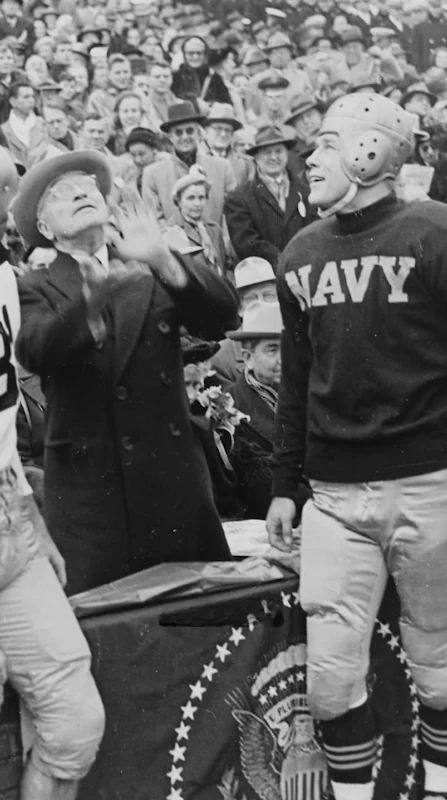
How Philadelphia police gave Black Friday its name — and why the familiar retail profit explanation came later.
How Philadelphia police gave Black Friday its name — and why the familiar retail profit explanation came later.
The earliest printed evidence found so far is a Women’s Wear Daily report from November 28, 1960. Philadelphia merchants complained that police were forecasting “black Friday” traffic jams, according to the citation list compiled by researcher Barry Popik.
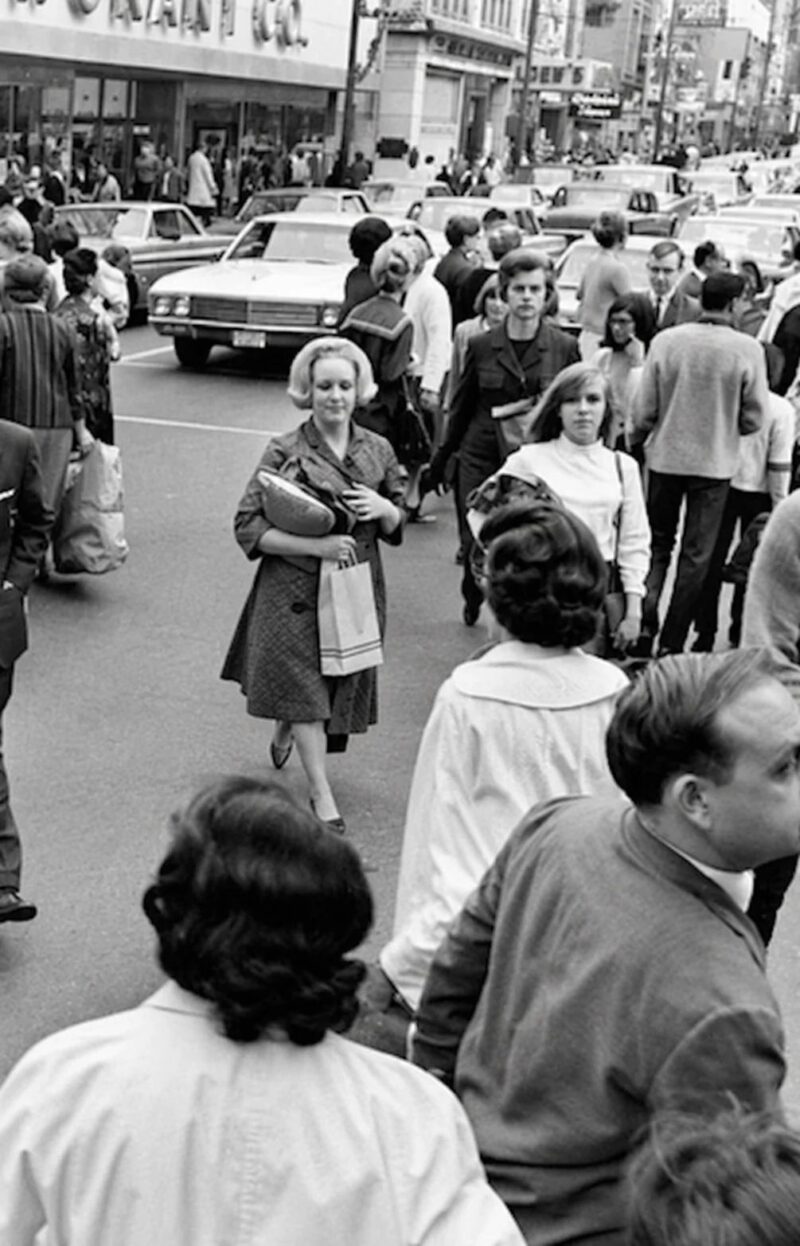
In January 1966, stamp dealer Martin Apfelbaum wrote in The American Philatelist that the Philadelphia Police Department had named the day Black Friday and did not mean it fondly, a column Taylor-Blake shared with word researchers in 2008.
The key evidence
By November 1960, the name was already associated with police warnings about traffic congestion — not retailers celebrating profits.
The Paper Trail From 1951 to the Late 1980s
By date, the shopping meaning takes hold in Philadelphia first and the ledger explanation trails well behind.
| Year | Source | What it shows |
|---|---|---|
| 1951 | Factory Management and Maintenance | Workers skip the day after Thanksgiving |
| 1958 | The Philadelphia Inquirer | A “Big Friday” shopping day appears |
| 1960 | Women’s Wear Daily | Merchants object to police forecasts |
| 1961 | Public Relations News | Officers routinely say Black Friday |
| 1970 | The Philadelphia Inquirer | A store executive jokes about ledger ink |
| Late 1980s | National coverage | The term spreads beyond Philadelphia |
Timeline compiled from historical newspaper references and research into the term’s earliest documented uses.
The cheerful “Big Friday” appears in print before the gloomy name. Our reading, not a documented fact, is that officers said Black Friday aloud for some time before reporters wrote it down.
Ten years separate the ledger joke from the police complaints, a long wait for a name supposedly created to celebrate profit.
Merchants Tried to Rebrand It as Big Friday
Philadelphia retailers did not want their busiest weekend named after a disaster.
In December 1961, Public Relations News reported that merchants had taken the problem to Abe S. Rosen, the deputy city representative, who proposed calling the days Big Friday and Big Saturday.
The newsletter, transcribed by Taylor-Blake for the American Dialect Society, credited the campaign with a strong weekend downtown.
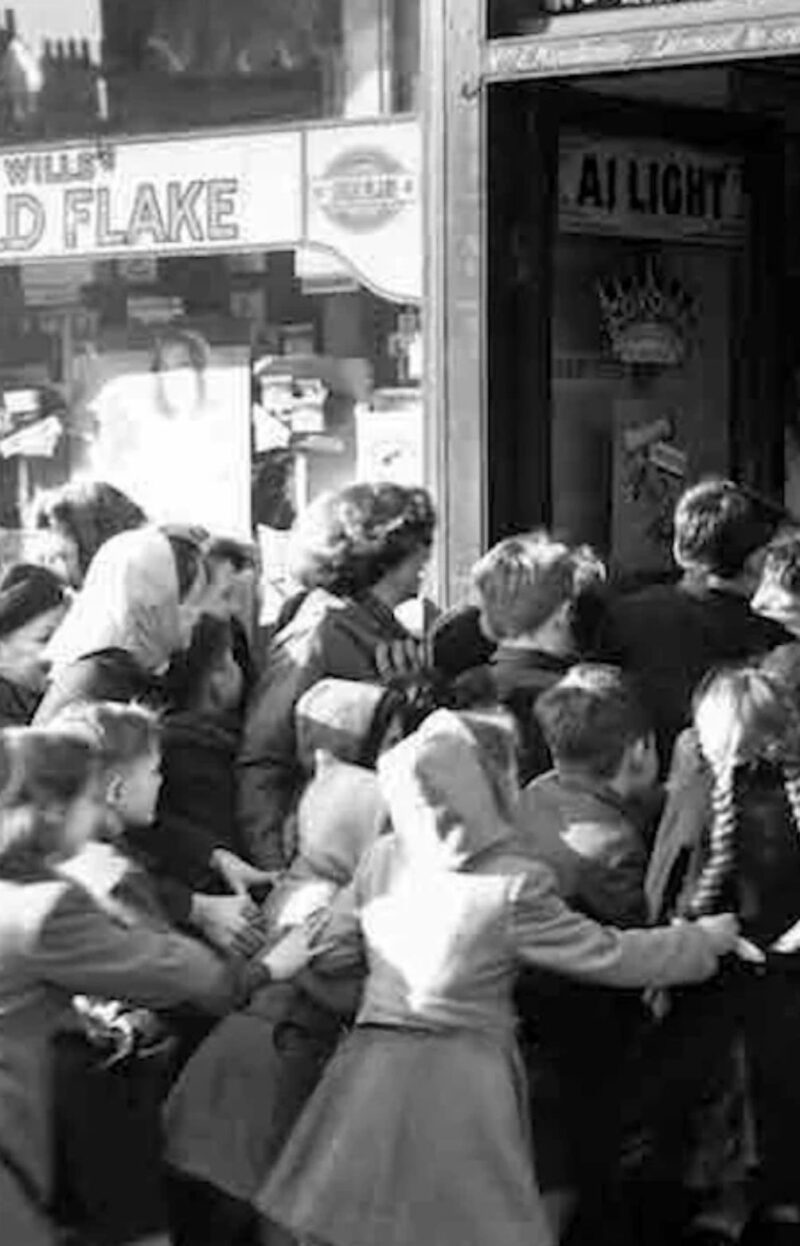
The new name never stuck. Joseph P. Barrett, a former Evening Bulletin police reporter, recalled in 1994 that he and a colleague put Black Friday on the front page in the early 1960s. The police commissioner, he wrote, answered the next year with a Big Friday press release.
How Philadelphia retailers tried to replace the name Black Friday — and how the retail profit story eventually took over.
How Philadelphia retailers tried to replace the name Black Friday — and how the retail profit story eventually took over.
Our interpretation
In our view, the episode settles the question. Nobody launches a rebranding campaign for a name invented to celebrate profits.
How the Ledger Story Took Over
The profit explanation grew out of the same downtown stores. In November 1970, the Inquirer quoted Reeves Wetherill of John Wanamaker joking that the only black thing about the day was the ink in the books. By the 1980s, the joke had hardened into an origin story.
Oral accounts credit Peter Strawbridge of Strawbridge & Clothier with spreading the ledger version, but a 2012 Philadelphia Inquirer report on the name found no documentation.
Strawbridge himself said in 1984 that, if anything, the day should be called “Green Friday.”
Retail scholar Michael Lisicky told CBS Philadelphia in 2011 that the busiest shopping day was the Saturday before Christmas.
Our opinion is that the ledger story won because it flatters everyone, turning shoppers into heroes who rescue the year.
Slavery Story Is False
Each November, a claim circulates online that Black Friday began as a day when enslaved people were sold at a discount, supposedly so slaveholding farmers could ready their fields. No record supports it. A Daily Maverick explainer on the rumor notes that most fields had already been harvested by late November and that planting work came in spring.
What the records actually show
Every documented early use of the phrase for the day after Thanksgiving concerns factory absences, downtown traffic or store promotions. There is no credible historical documentation connecting the shopping term to discounted sales of enslaved people.
We think the rumor deserves a careful answer rather than ridicule. People share it because the word black carries a heavy history in the United States, and a dark origin can feel believable. The evidence still leads back to Philadelphia police and their traffic jams.
What to Tell the Next Person Who Repeats the Ledger Story
When the banners go up on November 27, every one will still carry a nickname Philadelphia police were using by 1960. The officers meant gridlock, extra duty and sidewalks too crowded to walk. Merchants then spent decades softening that meaning.
If someone at your table repeats the red-to-black version this year, the correction fits in one sentence. Police named the day for its traffic, and the profit explanation arrived about ten years later.
One sentence to remember
Black Friday was a headache for Philadelphia police before it became a celebration of retail profits.
Have a family clipping that uses the term before November 1960? We would like to see it, because the earliest citation can still move.
Questions Worth Asking
Why Does Black Friday Fall on a Different Date Each Year?
Black Friday follows Thanksgiving, and Thanksgiving moves. President Franklin D. Roosevelt signed a joint resolution on December 26, 1941, that fixed Thanksgiving on the fourth Thursday of November, so Black Friday always lands between November 23 and 29.
Did Any Other City Use the Name That Early?
Yes. A December 1, 1961, report in the Shortsville-Manchester Enterprise described police in nearby Rochester, New York, calling the day Black Friday. Philadelphia simply has the richest paper trail.
Is the Army-Navy Game Still Played That Weekend?
No. The game now falls on the second Saturday of December, and the Naval Academy event listing for 2026 puts the next game on December 12 in East Rutherford, New Jersey.
How Many People Shop Over the Black Friday Weekend Now?
The National Retail Federation estimated a record 202.9 million shoppers from Thanksgiving Day through Cyber Monday in 2025. On Black Friday alone, about 80.3 million shopped in stores and 85.7 million online. Both figures are estimates from a survey of 3,099 adults.
Where Did the Name Cyber Monday Come From?
Cyber Monday is a deliberate marketing coinage. A KVUE fact check traced the term to Ellen Davis of Shop.org, the digital arm of the National Retail Federation, who introduced it in a 2005 press release.