
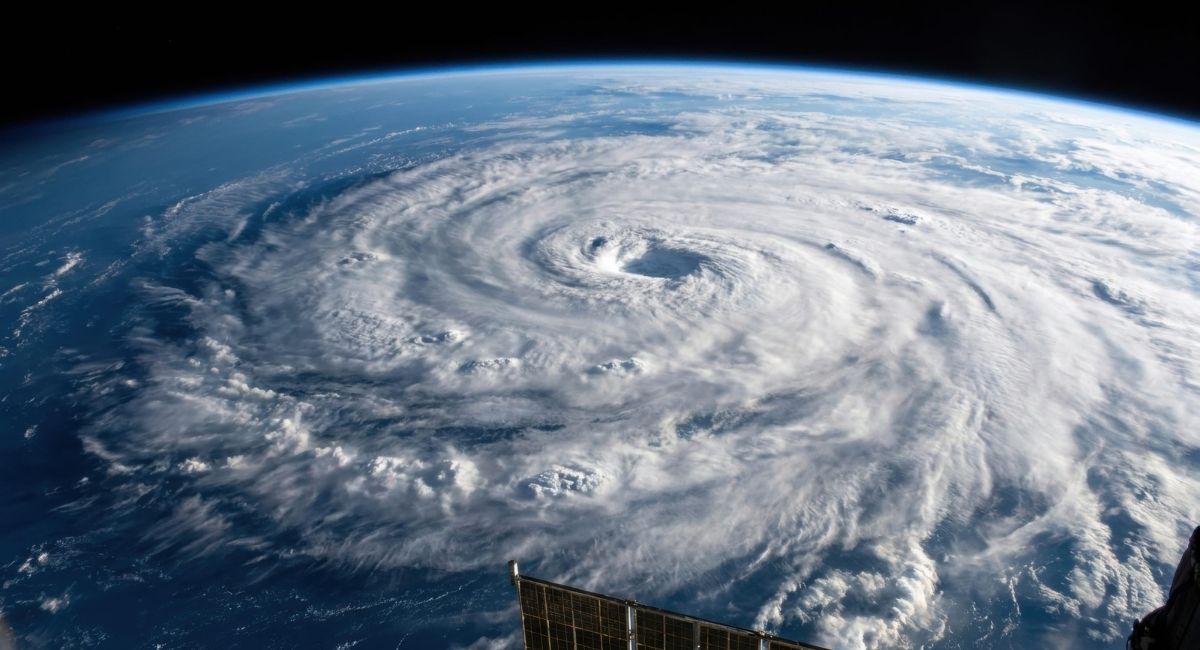
Forecasters spent the first days of November 2026 watching a broad low east of the Bahamas, and a Fox Weather analysis from November 3 noted that it would be called Kyle if it organized.
Nobody at the National Hurricane Center picked that name this week. Kyle has been printed on the 2026 list since that same list was last used in 2020.
So who chose Kyle, and why do storms get human names at all instead of numbers? The answer runs through feast days, an Australian forecaster with a grudge, wartime weather maps, a Florida activist and a United Nations committee that still meets every year.
Names Travel Faster Than Numbers
The practical case for names is refreshingly simple. The World Meteorological Organization calls naming the fastest way to communicate warnings, and names make it easier to keep several active storms apart. A short, distinctive word survives a crackly radio call far better than a string of coordinates.
NOAA has a cautionary example. Before names, advisories about one storm were sometimes mistaken for warnings about another storm hundreds of miles away, according to the National Ocean Service explainer on storm names.
WMO is explicit on a point that surprises many people. Tropical cyclones are not named after individuals, so Hurricane Melissa was never a tribute to any particular Melissa.
A name, in other words, is a label chosen for clarity. The humans behind it are imaginary.
Before the Lists, Storms Got Saints, Grudges and Girlfriends
Long before any committee existed, storms picked up names the way nicknames stick. The NOAA hurricane research FAQ on naming history collects some wonderfully odd examples.
- In the West Indies, storms were named for the saint whose feast day they struck on, which produced San Felipe hurricanes in both 1876 and 1928.
- In Australia in the late 1800s, forecaster Clement Wragge used Greek letters, then the names of South Sea Island women, and later named cyclones after politicians he disliked.
- George R. Stewart published the novel Storm in 1941, in which a junior meteorologist names Pacific storms after former girlfriends.
- In 1944, Army Air Forces forecasters on Saipan, including Reid Bryson, decided to name storms after their wives.
Australian meteorologist Clement Wragge helped popularize the practice of giving storms human names in the late 1800s.
Australian meteorologist Clement Wragge helped popularize the practice of giving storms human names in the late 1800s.
Our favorite is Wragge. Naming a destructive storm after a politician is a very public way to win an argument.
How Human Names Became Official
The modern system took shape over a few decades, and the dates show how often forecasters changed their minds.
| Year | Who | What changed |
|---|---|---|
| 1947 | Air Force Hurricane Office, Miami | Phonetic names such as Able and Baker, used internally |
| 1950 | Miami Hurricane Warning Center | Phonetic names reach public bulletins |
| 1953 | U.S. Weather Bureau | Female names adopted for Atlantic storms |
| 1978 | National Hurricane Center request | Alternating names begin in the eastern Pacific |
| 1979 | Atlantic basin | Male names join the Atlantic list |
| 2021 | WMO Hurricane Committee | Greek alphabet dropped |
The 1950 jump to public use came after three Atlantic hurricanes were active at once. The 1979 switch had a push from outside the weather service.
Roxcy Bolton, a Coral Gables activist with the National Organization for Women, pressed the National Hurricane Center from 1970 onward to drop women-only names, as Florida Memory recounts. The first male-named Atlantic hurricane, Bob, arrived in 1979.

A WMO Committee Picks the Atlantic Names
For the Atlantic, the Caribbean and the Gulf, names come from the Hurricane Committee of WMO Regional Association IV, which brings together weather services from North America, Central America and the Caribbean. Member weather services propose names that are short, easy to pronounce and familiar in the region, and the committee approves them.
Meteorologist Amy Sweezey explains how hurricane names are selected, why naming lists rotate, and when a storm’s name is retired.
The National Hurricane Center list page spells out the mechanics.
- Each Atlantic list holds 21 names in alphabetical order.
- Six lists rotate, so the 2026 list returns in 2032.
- An off-season storm takes its name by calendar date, so a late December storm uses the old season list.
Look closely at the 2026 list and you will spot English, Spanish and French names side by side, from Cristobal to Rene. We read that mix as a small map of the countries around the committee table.
Did You Know the Greek Alphabet Got Benched?
In 2020, the Atlantic ran through all 21 regular names and spilled into Greek letters. The experiment did not survive the following spring. On March 17, 2021, the WMO Hurricane Committee ended Greek-letter names for good.
The committee had several complaints. Zeta, Eta and Theta sound alike and arrived back to back, some Greek names translated confusingly into regional languages, and there was no plan for retiring a Greek letter after a deadly storm such as Eta or Iota.
A supplemental list of ordinary names now takes over, starting with Adria, Braylen and Caridad. It skips Q, U, X, Y and Z, the same letters missing from the regular Atlantic lists, and its names can be retired like any others.
Some Names Are Too Painful to Reuse
A name leaves the rotation only when its storm was so deadly or costly that reusing it would be inappropriate.
By then the name has become shorthand for a disaster, a word with a starry backstory of its own, as we showed in words left behind by stargazers.
The most recent example came in March 2026, when the WMO Hurricane Committee retired Melissa and chose Molly as its replacement.
Melissa peaked as a Category 5 hurricane with winds near 185 mph and became the strongest hurricane on record to make landfall in Jamaica.
WMO counted more than 90 deaths across Jamaica, Haiti and other island nations after the storm in October 2025.
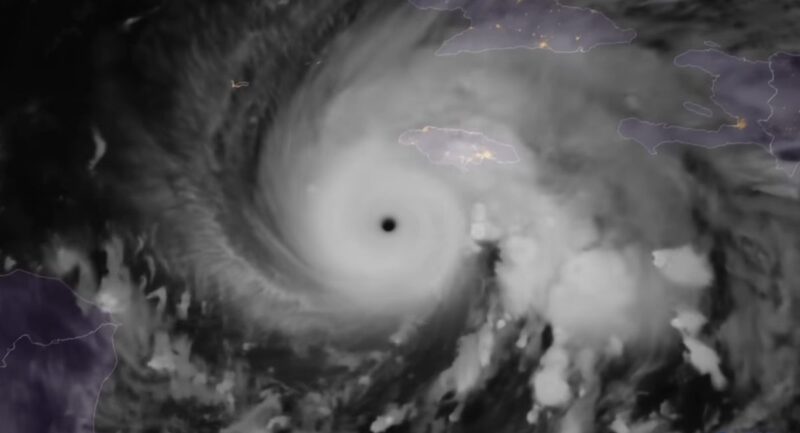
Hurricane Melissa devastated parts of Jamaica in October 2025, showing why the names of particularly destructive storms are permanently retired.
The National Hurricane Center retired-names list now holds 100 Atlantic names going back to 1954. Here is a detail we enjoyed spotting. Leah, on the 2026 list, is the replacement for Laura, retired after the 2020 season.
Do Female Names Make Storms More Dangerous?
In 2014, a study in the Proceedings of the National Academy of Sciences claimed that hurricanes with female names killed more people, possibly because people took them less seriously and prepared less. The idea spread quickly, and it still circulates online every season.
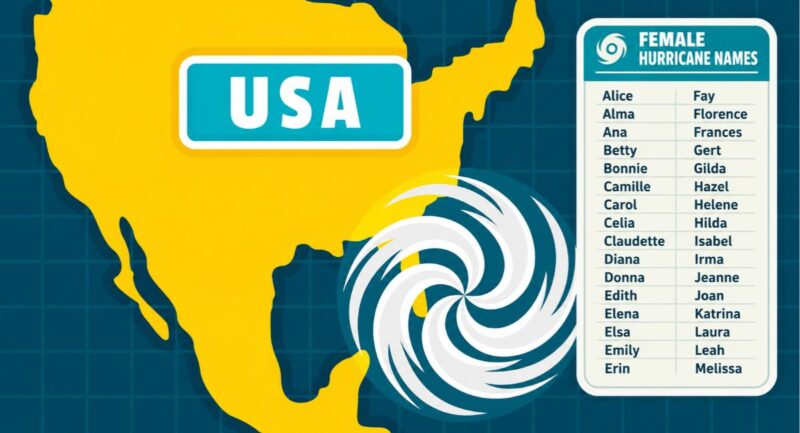
The evidence is weaker than the headlines suggested. A reply published in the same journal found no significant name effect for storms after 1979, when alternating names began. The effect also vanished once the four deadliest storms, three of them from the women-only era, were set aside.
Our recommendation is to ignore the name entirely and read the category, the forecast cone and your local emergency warnings. A storm called Bob deserves the same respect as one called Helene.
Kyle Is Next in Line
Back to that low east of the Bahamas. The 2026 Atlantic season reached late October with 10 named storms and a single hurricane, Isaias, according to Boston Globe coverage of Josephine. If the low organizes, Kyle becomes the 11th name used. Should nothing form before November 30, Kyle waits for 2032.
Either way, the name was set by a committee years ago, screened for easy pronunciation across languages, and could be struck from the list next spring if the storm turns deadly. Which retired name do you still remember from your own hurricane seasons? We would love to hear it.
Frequently Asked Questions