
My Chicago notebook for March 2019 holds a line copied from a sign taped inside a dry cleaner. In red marker it said “daylight savings starts Sunday”, and someone had underlined the S twice.
The standard name is daylight saving time, singular, because the practice saves daylight.
The plural is so widespread that dictionaries now list it as a variant, and the House bill that would make the clocks permanent uses it in its title.
The S has a long head start in American banking language, and that head start explains most of the story.
The Standard Term Has No S
The phrase works the way time-saving works in an appliance ad. Saving is the action, daylight is what gets saved, and together they describe a kind of time.
A savings account holds money. Daylight saving time holds nothing. It moves an hour of sunlight from early morning to evening.
Here is how the reference shelf lines up in October 2026.
- The Merriam-Webster entry for daylight saving time dates the term to 1908 and lists daylight savings time as an accepted variant.
- The Canadian government writing tip on daylight time and summer time prefers the singular and calls the plural grammatically incorrect.
- The copy editors at ACES summed up the major style guides in 2015 as lowercase, singular and unhyphenated.
- Linguist Mark Liberman observed in a 2017 Language Log post on the phrase that speakers stress the middle word, DAY-lite SAY-ving time, an unusual pattern for this kind of phrase.
An English Builder Started the Campaign in 1907
According to the National Museums Scotland account of his campaign, he wanted clocks moved forward 20 minutes on each of four Sundays, 80 minutes in all, so people and dairy cows could adjust gently.
His allies took the idea to Parliament as the Daylight Saving Bill in 1908, and the House of Commons rejected it. Willett died in March 1915. Britain put its clocks forward an hour on May 21, 1916, and called the result summer time.
Discover the story of William Willett, the British builder who campaigned for daylight saving time in 1907. Learn how his proposal to change the clocks helped shape the way countries manage daylight today.
A Pittsburgh Councilman Carried It to Washington
I grew up in Pittsburgh and did not learn the name Robert Garland until adulthood, which my grandmother would have counted as a hole in my education. Garland was an Irish immigrant who ran a nuts and rivets factory and sat on Pittsburgh City Council from 1911 to 1939.
Rick Sebak writes in Pittsburgh Magazine that Garland chaired the Special Committee on Daylight Saving for the U.S. Chamber of Commerce and lobbied Washington for it. President Woodrow Wilson signed the result on March 19, 1918, under the title “An Act To save daylight and to provide standard time for the United States,” and gave Garland a signing pen.
Opposition won the next round. Congress overrode a Wilson veto, and on August 20, 1919, the nation got “An Act For the repeal of the daylight-saving law,” hyphenated and singular. Pittsburgh kept setting its clocks ahead anyway.
Chicago Voted to Keep It in 1920
When I moved to Chicago in the late 1990s, I assumed the city had always followed federal clock rules. It had not. After the national repeal, aldermen argued for about six months before approving summer clock changes for 1920, as WBEZ recounts in its history of the local fight.
That fall, Chicago voters chose to keep the practice by 353,145 to 291,994, according to a Chicago Public Library timeline. The campaign pamphlet that year was titled Daylight Saving for Chicago, with no S anywhere.
The city ran its own summer clock from 1921 through 1940, from late April to late September. National War Time took over from February 9, 1942, to September 30, 1945, the years when Chicago tried to cancel Halloween. The Uniform Time Act of 1966 later ended local choices like the one Chicago had made.
Why the S Feels So Natural
The most convincing explanation I have found comes from Anne Curzan, an English professor and linguist at the University of Michigan.
In a 2020 segment for Michigan Public, she pointed out that Americans had been saying savings in banking phrases since the early 1800s.
A newer phrase that sounds almost the same gets pulled toward the familiar plural.
The Merriam-Webster entry for savings bank gives a first known use of 1813. Savings account follows in 1850. Daylight saving time does not appear until 1908, nearly a century behind the bank.
Quartz offered a second reason in 2017, that Americans treat time like money. I find that plausible, but it is an interpretation, not a dated citation. The banking head start is what the record can show.
Congress Has Spelled It Both Ways
Lawmakers are no tidier about the S than the rest of us. Federal law offers a road trip of its own, with each stop dated.
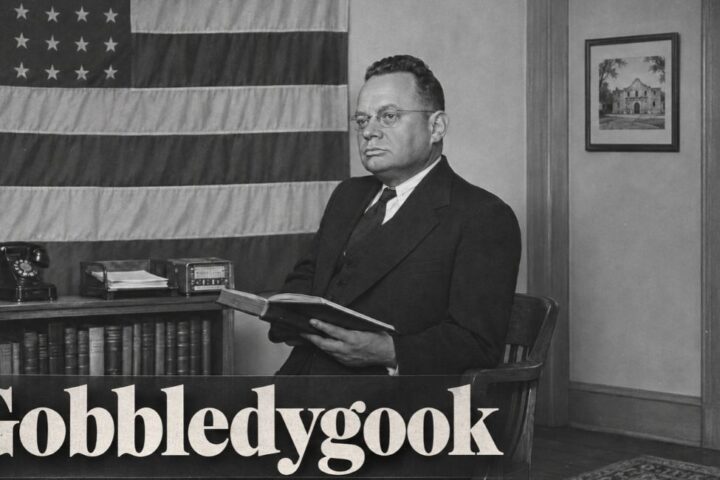
Government wording has attracted criticism for decades. In 1944, former congressman Maury Maverick coined gobbledygook to describe confusing official language, although his complaint went beyond spelling.
- 1966. The operative section of the Uniform Time Act, now 15 U.S.C. 260a, never names the period. It only says standard time is “advanced” one hour.
- August 8, 2005. The Energy Policy Act section that moved the change to March and November carries the heading “DAYLIGHT SAVINGS” in the enacted public law. A later subsection of the same section writes “Daylight Saving Time.”
- January 3, 2025. Rep. Vern Buchanan of Florida introduces H.R. 139, the Sunshine Protection Act.
- July 14, 2026. The House passes it 308 to 117, according to the House roll call record. The version the House passed opens with “To make daylight savings time permanent.”
What the Printed Record Shows
To see how far the S has traveled in print, I pulled yearly figures for both phrases from the Google Books Ngram Viewer, English corpus, no smoothing. I then divided one frequency by the other.
| Year | Plural uses per 100 singular uses |
|---|---|
| 1960 | 10 |
| 1970 | 25 |
| 1990 | 72 |
| 2000 | 87 |
| 2010 | 59 |
| 2022 | 26 |
My guess, and it is only a guess, is that two decades of grammar columns sent editors hunting for the stray S. The corpus also stops at 2022, so it says nothing yet about the 2026 debate.
What Happens on November 1 and in the Senate
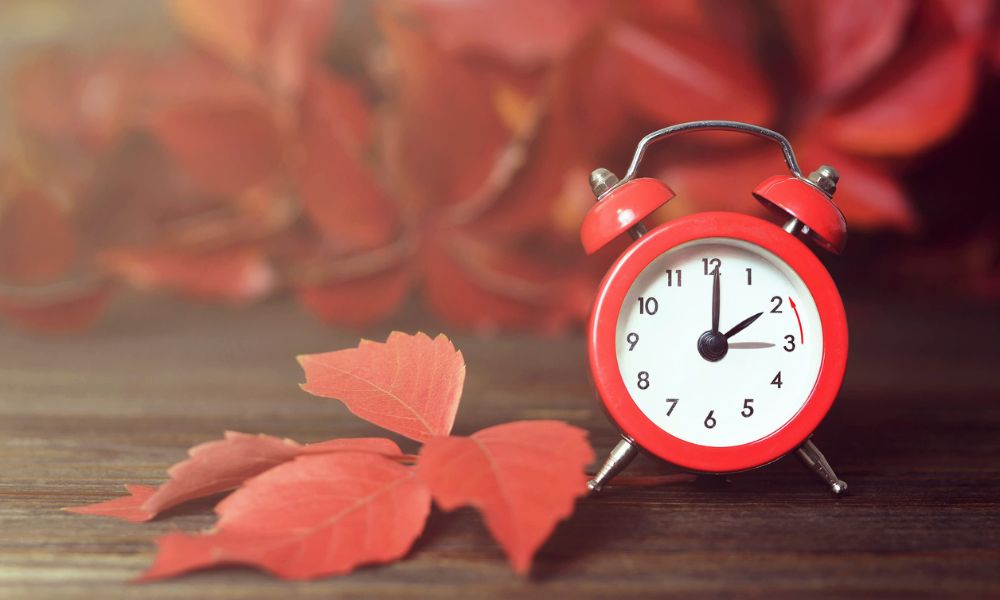
Spelling aside, the clocks have a schedule, and the facts sort into three different levels of certainty.
Keeping them apart matters when reading coverage of the bill.
- Confirmed. Clocks fall back at 2 a.m. on Sunday, November 1, 2026, wherever the change is observed. The Department of Transportation page on daylight saving time lists Hawaii, most of Arizona and five territories as places that skip it.
- Passed, not law. H.R. 139 cleared the House in July but still needs the Senate and a presidential signature.
- Undecided. No Senate vote had been scheduled as of early October, and sleep doctors are lobbying for permanent standard time instead, as our guide to the November 1 clock change explains.
For now, set your clocks back an hour before bed on October 31.
Which Spelling Should You Use
My advice, and it is advice rather than a rule, is to write daylight saving time in anything formal. A school notice, a work email, a news story and a résumé all qualify. Editors expect it, style guides ask for it, and it describes the practice accurately.
In conversation, say whatever comes naturally. Daylight savings is a well-documented variant with more than two centuries of banking language behind it, and nobody misunderstands it. Correcting a friend at dinner wins you nothing but a cold look.
Keep the term lowercase in running text. Capitals belong to zone names such as Central Daylight Time. Outside North America, most English speakers say summer time and skip the argument entirely. My grandmother would have struck the extra S with one stroke of her pen and then forgiven you for it.
Back to the Sign
The dry cleaner got the important part right, because the clocks did change that Sunday in March 2019. The S in red marker carried more than two centuries of banking talk with it, and in July 2026 the same S rode into the title of a bill that passed the House by 191 votes.
On November 1 the clocks fall back at 2 a.m. whatever we call the hour. I will write it singular in my notebook, thinking of my grandmother and her ink-only crossword. I would still never have corrected that sign.