
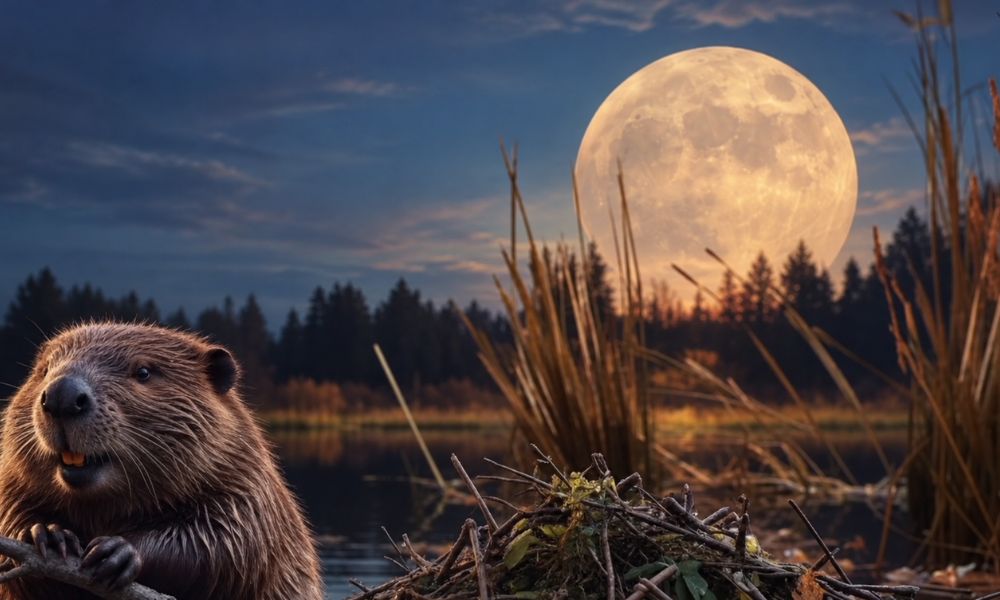
I grew up in Tucson, where the only beavers I knew lived in picture books. The first one I saw swam past me on a pond north of Portland, Maine, a dark head cutting a V and towing a branch twice its length. It was late November, the shallows had turned white with ice, and a full moon was rising over the spruce.
The usual story says it marked the last chance to trap beavers before the ice locked them in. The real history is messier, and more interesting.
For a quick look at what makes November’s full moon special, KARE 11 explains the story behind the Beaver Moon in this short video.
Where the Name Beaver Moon Comes From
Most of the moon names you see each month did not come straight from one tribe or one century.
NASA traces the set in wide use today to the Maine Farmer’s Almanac, which began publishing the names in the 1930s. The almanac credited the Algonquin tribes of the northern and eastern United States.
NASA also gives two explanations for the name, and neither has a firm document behind it. One says mid-fall was when trappers set beaver traps before the swamps froze, to secure warm winter furs. The other says the name simply reflects how busy beavers are as they get ready for winter.
The Beaver Moon has a long history rooted in seasonal traditions.
The Moon’s influence on language goes well beyond seasonal names.
Words we use without a second thought, including Monday, month and even lunatic, preserve traces of older beliefs about the Moon and its relationship with everyday life.
This short video explores the folklore behind its name and why November’s full moon has held special meaning for generations.
Other names for the same moon include the Frost Moon and the Snow Moon, likely from more northern tribes, according to NASA. Those names were also applied to the last full moon of fall or to the December moon.
Why Trappers Raced the Ice
The trapping explanation makes economic sense, which is why I take it seriously.
For two centuries, beaver fur fed the European hat trade. The underfur, called beaver wool, was shaved off the skin and pressed into felt.
According to the Canadian Encyclopedia, beaver felt dominated European hatmaking until the 1830s, when silk hats took over.
Pelts were valuable enough that the Hudson’s Bay Company used them to set prices. The standard unit was the Made Beaver, and in the 1860s the company began issuing brass Made Beaver tokens.
The logic of the deadline is easy to follow. Once ponds froze hard, beavers spent their days under the ice, and reaching them took more work. A late fall set, made while the water was still open, was the easier catch.
What Beavers Do Before the Pond Freezes
A beaver colony spends the fall building a pantry.
A USDA wildlife chapter on beaver biology describes how construction of the winter food cache often starts after the first hard frost.
I see the same rush at my pond every November.
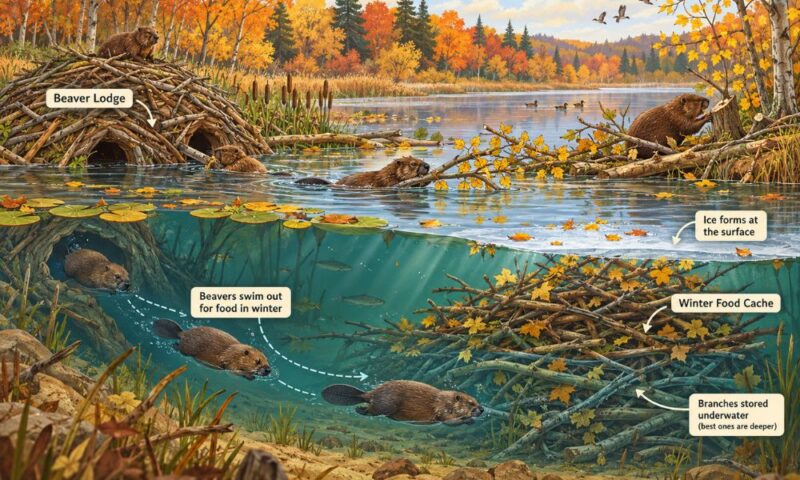
- Beavers cut branches and sink them in a pile near the lodge, anchored in the mud.
- The top of the pile freezes into the ice, so they push the best food deeper, where it stays unfrozen.
- All winter they swim out from the lodge, under the ice, to pull branches from the cache.
- A beaver can stay underwater for up to 15 minutes on one breath.
The illustration below shows how beavers prepare their underwater food supply and keep it accessible even after the pond freezes over.
Adults usually weigh 35 to 70 pounds and grow to about 4 feet long, tail included. That is a lot of animal to feed for four months, all of it from wood stored before the pond closes.
Did You Know Beavers Do Not Hibernate?
Several popular explainers say the Beaver Moon marks the time beavers start to hibernate. They do not.
Vermont State Parks puts it plainly, noting that beavers stay active through the winter, eating stored bark from trees such as poplar, willow and alder.
What they do is slow down. Adults lower their activity and lean on fat stored in the fall, and the tail serves as part of that reserve. Inside a snow-covered lodge, a family stays near freezing while the air outside drops far below it.
Beaver Winter Fact Check
Do Beavers Hibernate?
A common misconception about beavers and winter survival.
|
Myth
Beavers sleep through the winter inside their lodges. |
Fact
Beavers stay active all winter, swimming under the ice and feeding on branches they stored in the fall. |
✦ What Actually Happens in Winter?
Beavers reduce their activity during cold weather and spend more time inside the lodge, but they do not enter true hibernation. Instead, they rely on stored body fat and a winter food cache anchored underwater near the lodge.
Note: A beaver lodge is insulated with mud, sticks, and packed plant material, helping the family stay protected through freezing weather.
I learned to distrust the hibernation line the first winter I lived here. In January, I found fresh gnawing on a shoreline aspen next to a hole in the ice. The beaver had been working while the rest of the pond looked dead.
How Close Maine Came to Losing Its Beavers
The fur trade did not just name a moon. It nearly erased the animal. The same USDA chapter cites an early estimate of 60 to 400 million beavers in North America before European settlement, and by 1900 trappers had largely wiped them out in the eastern United States.
Maine followed that curve closely. A Maine Department of Inland Fisheries and Wildlife species assessment puts the precolonial population at up to 100,000 beavers and says overtrapping brought the state close to losing them by 1900. The state banned the harvest in 1899, and the first areas did not reopen to trapping until 1915.
The same assessment estimates 45,000 to 70,000 beavers statewide, about as many as Maine habitat can support. The early figure is a historical estimate, not a count, so I read it as a scale rather than a number to trust down to the last animal. The recovery, though, is real, and I can see it from the trail.
A JOURNEY THROUGH TIME
The Beaver Moon Through History
From the North American fur trade to the full moon traditions we recognize today.
1600s–1800s
The Beaver Fur Trade
European demand for felt hats made beaver pelts valuable in North America, driving intensive trapping across the continent.
1830s
Fashion Begins to Change
Silk hats increasingly replaced beaver-felt hats, helping reduce European demand for beaver fur.
1899
Maine Protects Its Beavers
Following severe population declines, Maine banned beaver harvesting, marking an important step toward recovery.
1930s
A Moon Name Reaches More Readers
The Maine Farmer’s Almanac helped popularize traditional full moon names, including the Beaver Moon, among American readers.
November 24, 2026
The 2026 Beaver Moon
November’s full moon continues a seasonal naming tradition associated with beavers, winter preparations, and the changing landscape.
A Tradition With More Than One Explanation
The Beaver Moon name is commonly linked to trapping before winter freeze-up, but another explanation points to beavers’ busy fall preparations. Its precise historical origin remains uncertain.
Maine Still Opens Beaver Season Before the Ice
The old timing survives in modern rules. The state trapping lawbook for 2026 and 2027 opens beaver season in late October, weeks before most ponds freeze.
- Wildlife Management Districts 1 through 4 open October 18, 2026, and close April 30, 2027.
- Districts 5, 6 and 8 through 11 open October 25, 2026, and close April 30, 2027.
- The remaining districts, 7 and 12 through 29, open October 25, 2026, and close April 15, 2027.
The season now runs through the ice months, with separate rules for traps set under the ice. If you trap, the lawbook lists the tending requirements by month. For watchers like me, the season dates explain why you may see trap markers near a lodge in November.
The Ice Deadline Is Moving
The name assumes the ice comes on schedule. In New England, the ice calendar has shifted, at least at the spring end. A U.S. Geological Survey study of 29 New England lakes found that spring ice-out moved earlier between 1850 and 2000, by about 9 days in the northern and mountain lakes and about 16 days in the southern ones.
That study measured the spring thaw, not the date ponds freeze in fall. I keep my own notes on the first full skim of ice at my pond, and the dates jump around by weeks. My notes are not data. They are why I would like to see the fall side of the record studied as carefully as the spring side.
In my opinion, the Beaver Moon now marks a deadline that is harder to predict than it was for the trappers who named it.
When to See the 2026 Beaver Moon
November Full Moon
Beaver Moon 2026
Date, peak times and essential facts
FULL MOON DATE
November 24, 2026
MOON TYPE
Supermoon
ALSO KNOWN AS
Frost Moon
PEAK IN EASTERN TIME
9:53 AM EST
Full Moon Peak Across the U.S.
Tuesday, November 24, 2026
Eastern (EST)
9:53 AM
Central (CST)
8:53 AM
Mountain (MST)
7:53 AM
Pacific (PST)
6:53 AM
Alaska (AKST)
5:53 AM
Hawaii (HST)
4:53 AM
All times refer to the same astronomical moment, not the local moonrise. Most of Arizona follows MST year-round.
✦ Why Is It Called the Beaver Moon?
The name is traditionally linked to beaver trapping before winter freeze-up and the animals’ preparations for colder weather.
Best viewing tip: Look for the nearly full Moon rising around sunset on November 23 and 24. Check the moonrise time for your city, since it varies by location.
The full moon peaks on Tuesday, November 24, 2026, at 9:53 a.m. EST, about 224,170 miles from Earth. Several calendars call it a supermoon because it falls near the closest point of its orbit. Do not expect a giant. NASA figures reported by CBS News put the 2024 Beaver Moon, a similar supermoon, at about 6.2 percent bigger and 12.8 percent brighter than an average full moon, a difference most eyes miss.
MOON FACTS EXPLAINED
Beaver Moon vs. Supermoon
Two names. Two different meanings.
Beaver MoonTRADITIONAL NAME November’s full moon, traditionally linked to beaver activity and trapping before winter freeze-up. |
SupermoonORBITAL DESCRIPTION A full moon near its closest approach to Earth, appearing slightly larger and brighter than average. |
✦ Can a Beaver Moon Also Be a Supermoon?
Yes! Beaver Moon is a traditional seasonal name, while supermoon describes the Moon’s position in its orbit. The November 24, 2026, full moon qualifies as both under commonly used definitions.
Note: “Supermoon” is an informal astronomy term, and definitions vary. The Moon illustrations are decorative and not drawn to scale.
The best view comes the evening before and the evening of the peak, as the moon rises around sunset.
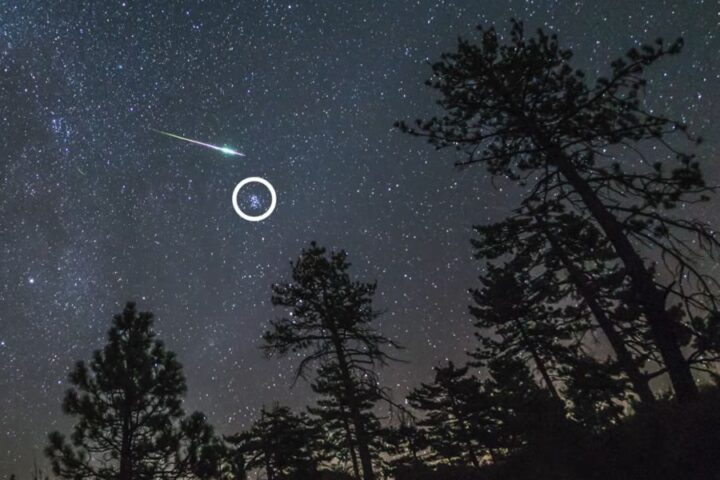
Since the clocks go back on November 1st, that moonrise lands near the end of the workday. The Orionid meteors from Halley’s Comet will have faded by then.
What I Will Be Watching on November 24
I will be back at the same pond on the evening of November 24, with notebook 41 and a thermos. I plan to log the time the moon clears the spruce, whether the ice reaches across the pond yet, and whether a V still crosses the open water.
Trappers used this moon as a deadline. I use it as a checkpoint. If the beaver is still towing branches under a full moon in late November, the cache is not done, and the pond is not closed. I would rather record that than repeat a name I cannot fully trace.