
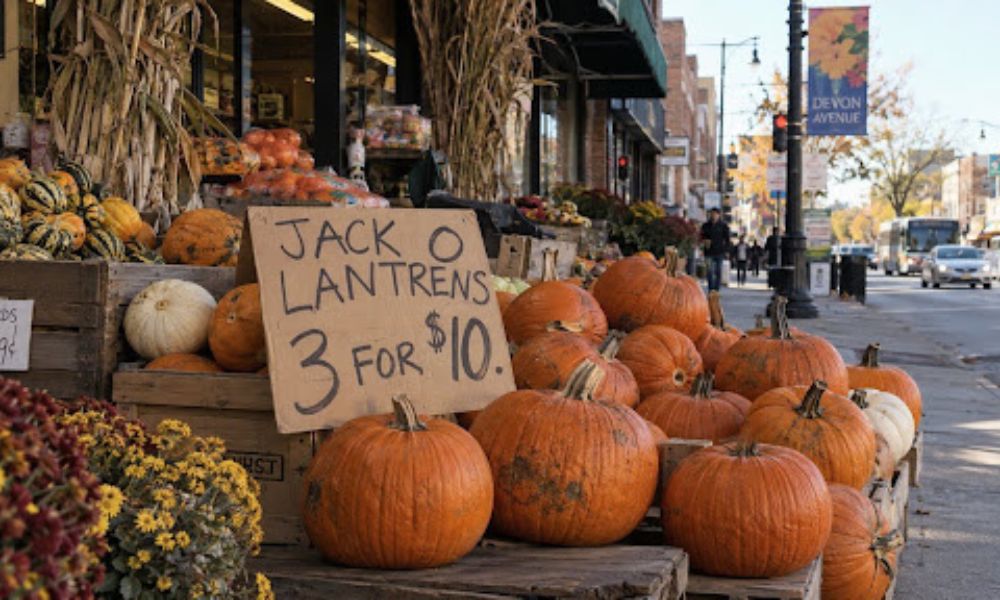
Last October, a produce stand near Devon Avenue in Chicago had a hand-lettered sign out front reading “JACK O LANTRENS 3 FOR $10.” Chicago has its own unusual Halloween history. During World War II, city officials even tried to rename the holiday, as the city’s wartime Halloween controversy shows.
I photographed it for my collection of misspelled signs and wrote the word in my notebook. Then I did what my grandmother taught me to do with every crossword answer. I asked where the word came from.
The answer surprised me. Long before anyone carved a pumpkin, English speakers used jack-o’-lantern (JAK-uh-lan-turn) for a man walking at night with a lantern, and for a ghostly light over wet ground.
The pumpkin joined the story roughly 170 years later, in America.
The name jack-o’-lantern has a history far older than the Halloween pumpkin. This short video explores the Irish legend of Stingy Jack, one of the stories associated with the tradition.
The Jack in the Name Could Be Any Man
The first half of the word is the easiest stop. By the late 1300s, according to the Online Etymology Dictionary entry for jack, English used the name as a stand-in for any ordinary man, much as French used Jacques. The name always counted as a familiar form of John, and it often carried a sneer.
Noah Webster still felt that sneer in 1828, when his dictionary described jack as a nickname for John used in contempt for an impudent or worthless fellow. The generic Jack shows up in many compounds.
- Jack-sauce, an impudent fellow, from the 1590s.
- Jack-in-office, a self-important petty official, from the 1680s.
- Jack Frost, recorded by 1785.
- Every man Jack, meaning every single person, from 1812.
So a “Jack with a lantern” was simply a guy with a light, name unknown.
A Man Walking the Streets With a Lantern
Merriam-Webster traces the watchman sense of jack-o’-lantern to 17th-century England, when a man carrying a lantern through dark streets might be called Jack of the lantern. The Oxford English Dictionary, as its dates are commonly reported, records that meaning from 1663 to 1704.
Before street lighting, a watchman walked the parish at night carrying his own light. Neighbors did not need his name, only the sight of a lantern coming.
Lantern came into English in the mid-1200s from Old French lanterne, from Latin lanterna, and further back from Greek lampter, “torch.”
From the 1500s to the 1800s, many writers spelled it lanthorn, because lantern sides were often made of thin, see-through horn.
The Online Etymology Dictionary calls lanthorn a folk etymology. The horn spelling made sense to the people who used it, but it was never the origin of the word.
The Same Name for a Light Over the Marsh
At almost the same time, the name attached itself to something stranger. Over bogs and marshes, travelers sometimes saw faint, drifting lights, now usually explained as burning swamp gases. Scholars called the light ignis fatuus, Latin for “foolish fire,” because it seemed to lead walkers astray.
English already had a name for it. Will with the wisp dates from the 1590s, where a wisp was a twist of hay or straw lit as a torch. By the 1650s, “Jack with the lanthorn” was doing the same job, and in some places the light was called Meg.
The marsh sense lasted. Webster defined “Jack with a lantern” in 1828 as “an ignis fatuus, a meteor that appears in low moist lands.” Notice what is missing from that definition. There is no pumpkin anywhere, even in an American dictionary.
Three Dictionaries, Three Sets of Dates
I never trust one dictionary on a first date, so I put the main references side by side. They agree on the order of events but not on the years, which is normal. Each dictionary dates a word by the earliest example its editors have found so far.
| Meaning | Online Etymology Dictionary | Oxford English Dictionary | Merriam-Webster |
|---|---|---|---|
| Man carrying a lantern | Not listed | 1663 to 1704 | 1600s |
| Light over a marsh | 1650s | 1658 | 1667 |
| Carved pumpkin lantern | 1828 | 1837 | 1800s |
The Merriam-Webster entry gives 1667 as its first known use, for the marsh light. Whichever column you trust, the people and the bog lights came first by more than 160 years.
Did You Know the First Carved Lanterns Were Turnips?
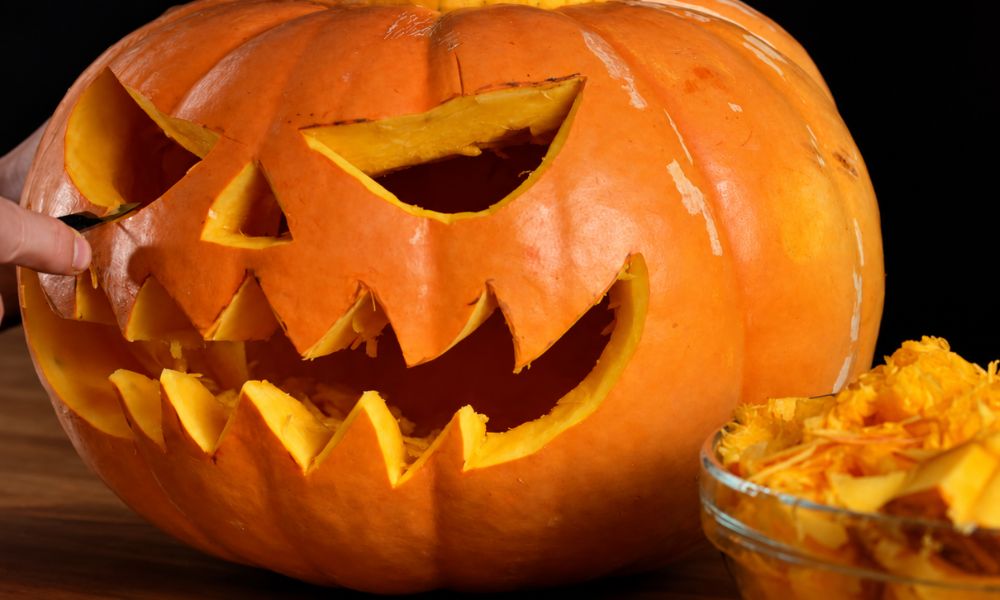
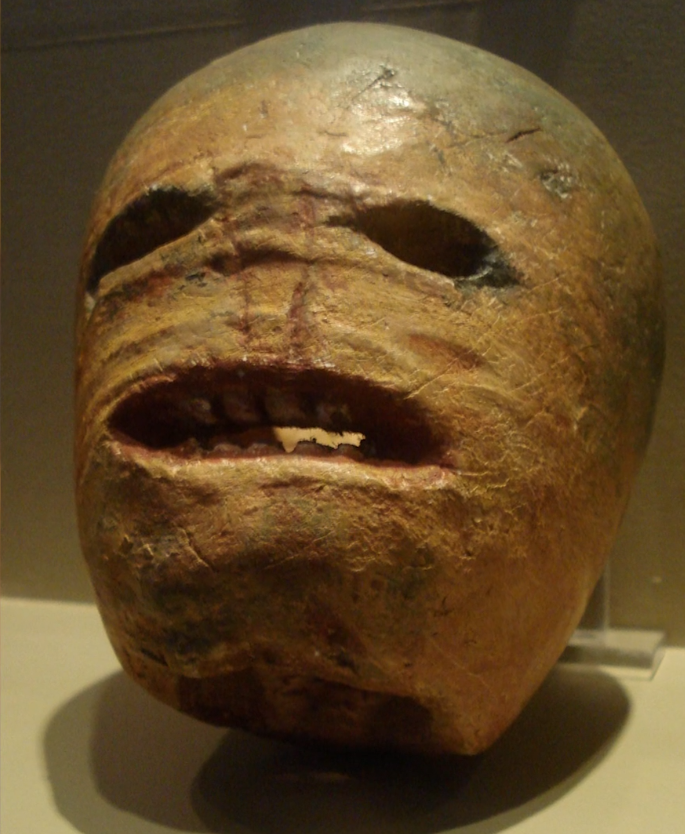
Pumpkins are native to the Americas, so they were not available to carve in Ireland or Britain when lantern customs there began.
The Clemson Cooperative Extension notes that the original Irish lanterns were carved from turnips, which grew easily there.
England had root-vegetable lanterns too, and they had their own names.
- In Worcestershire, folklore collectors recorded turnip lanterns called Hoberdy’s lanterns at the end of the 1700s.
- In Somerset, villages such as Hinton St George have long marked Punkie Night on the last Thursday of October, with lanterns carved from mangelwurzels, a large beet grown for cattle feed.
A punkie is not a pumpkin, despite the sound. The two words come from different places, and I would not connect them without a dated source that does. What the turnips and mangelwurzels show is that the carving custom and the word jack-o’-lantern traveled separately before they met.
For a quick look at how carved turnips became the Halloween pumpkins we know today, this short PBS video explores the legend of Stingy Jack and the European traditions that traveled to America.
Video: The History of the Jack-O-Lantern, PBS History in a Nutshell (2023).
Hawthorne and the First Carved Lantern in Print
The pumpkin sense appears in 19th-century America. Merriam-Webster names Nathaniel Hawthorne as the first known print use. In “The Great Carbuncle,” printed in 1835 and collected in Twice-Told Tales in 1837, a poet plans to hide a glowing gem under his cloak. A cynic scoffs that it “will gleam through the holes, and make thee look like a Jack o’lanthern!”
The passage never says pumpkin. Light gleaming through holes fits a carved lantern, but that reading is an inference.
The first picture came three decades later. Historian Cindy Ott identifies “The Pumpkin Effigy,” an engraving by L.W. Atwater printed in Harper’s Weekly on November 23, 1867, as probably the first image of a pumpkin jack-o’-lantern.
The carved pumpkin first belonged to the harvest season in general, the autumn of the Hunter’s Moon on October 26. The tie to October 31 came later.
The Stingy Jack Story Came Later Than the Name
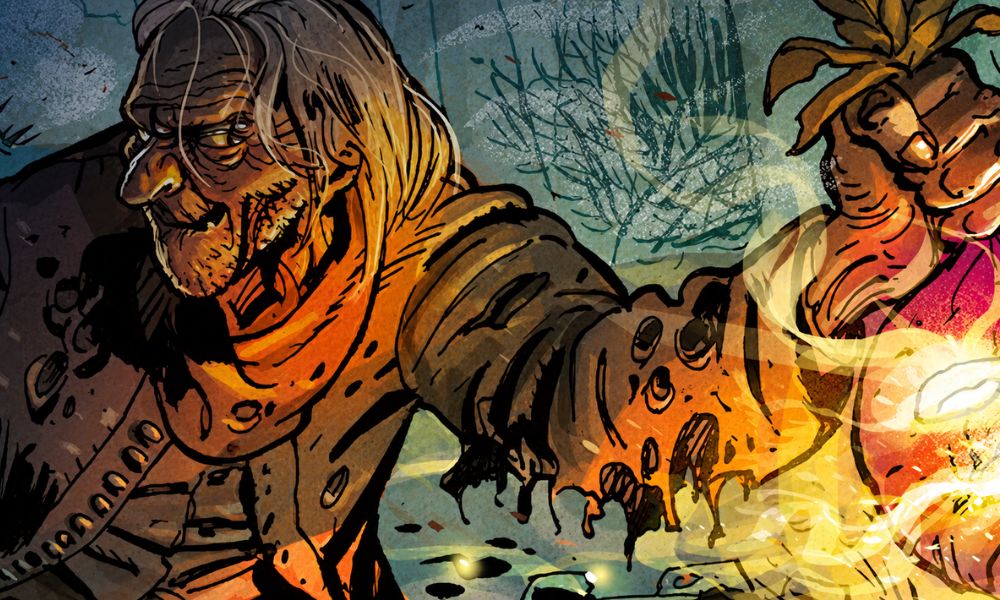
In the usual telling, Stingy Jack, an Irish trickster, cheats the Devil and wins a promise that his soul will never be taken. When he dies, heaven turns him away, and hell keeps its promise. The Devil gives him a coal, which Jack carries in a carved turnip forever.
The story may be old in oral tradition, but on paper the trail is short. An 1836 Dublin Penny Journal tale, discussed by Notre Dame Special Collections, blames bog lights on “that misguided traveler, Jack o’ the Lantern.” Clemson notes that the oldest known written version of the folktale dates only to the 1800s.
My opinion, based on those dates, is that the legend borrowed an existing name rather than creating it. English writers were using the phrase in the 1650s. The tale explains the name with a character, and that is exactly why it spread.
How the Spelling Settled Into Jack-o’-Lantern
The full phrase did not survive for long. By 1750, according to the Online Etymology Dictionary, writers had already squeezed “Jack with the lanthorn” into shorter forms. Three of them compete in old books and newspapers, sometimes in the same decade.
- Jack-o-lantern, with the o standing in for “of.”
- Jack-a-lantern, with an a in the same slot.
- Jackolantern, run together as one word.
The apostrophe in the modern jack-o’-lantern marks the missing letters of “of,” the same way it does in o’clock. Style guides still argue about hyphens and capitals, and the sign on Devon Avenue skipped all of them. Spelling has never been settled by complaint. It settles when enough people write a word the same way, and for this word they mostly have.
Another familiar English expression went through a similar shortening. The origin of the word goodbye traces back to the blessing “God be with ye,” which gradually became a single word.
Back at the Produce Stand
I went back to that stand this week, notebook in my bag, and the sign was up again with the same spelling. I did not correct it. Whoever lettered it used the word exactly as almost every speaker does now, for a pumpkin with a face, and that is what the word means today.
My grandmother would still have asked for the rest of the answer before letting me ink it in. That answer is a stranger on a dark street in the 1660s, holding up a horn-sided lantern so the neighbors could see him coming. The pumpkin borrowed his name.