

Most of us say goodbye dozens of times a week without hearing the blessing folded inside it.
The word began as “God be with ye,” a parting wish that English speakers wore down over a few centuries until God blurred into good.
Unlike many origin stories shared online, this one is true and comes with dates.Other languages hide their own surprises.
A casual German farewell hands you over to God, an Italian ciao once offered service as a slave, and nobody has proven where so long came from.
Below is what the dictionaries record and what they cannot settle.
Goodbye Started as a Blessing Long Before It Was One Word
The full phrase came first. According to the Online Etymology Dictionary entry for goodbye, “God be with ye” dates to the late 14th century, and the squeezed form godbwye appears in the 1570s.
As a noun, goodbye shows up in that same decade, while the interjection is first recorded in the 1590s.
Posts online often claim the phrase began in the 16th century. The blessing is about two hundred years older. What happened in the 1500s was the shortening.

Did You Know?
The earliest contracted form sits in a letter-book kept by Cambridge scholar Gabriel Harvey, now Sloane MS 93 at the British Library. In a 1573 letter quoted by the Oxford English Dictionary, Harvey jokes about receiving a “gallonde of godbwyes” and sending back “a pottle of howdyes.” A pottle was half a gallon, or 2 quarts, so he sent back half as many greetings.
How God Turned Into Good
Why is the word not spelled godbye today? Early writers spelled it every which way, and the Online Etymology Dictionary lists several 16th-century forms.
The switch from God to good probably came by analogy. Speakers already said good day, good morning and good night, so a parting word that sounded like good-something fit the pattern.
The Oxford English Dictionary gives that explanation and rejects the old claim that the phrase meant “God buy you,” in the sense of “God redeem you.” Spellings with buy record pronunciation, not theology.
The everyday word goodbye began as “God be with ye,” a blessing that gradually shortened over centuries of spoken English.
The word goodbye evolved from “God be with ye,” a centuries-old blessing that gradually became a familiar English farewell.
In our view, the shift is the best part. Nobody decided to remove God from the goodbye. Thousands of speakers heard a familiar pattern and followed it, which is how most language change happens.
English Once Had a Separate Farewell for Each Side of the Door
Farewell is older than goodbye, and it started as travel advice. According to the Online Etymology Dictionary history of farewell, it was traditionally said to the person setting off, and the traveler answered with good-bye.
Farewell comes from Middle English faren wel, recorded around 1200. The verb fare goes back to Old English faran, “to go, journey,” so the phrase first wished someone a good trip.
Korean keeps that split alive. Someone leaving says annyeonghi gyeseyo (ahn-nyuhng-hee gyeh-seh-yoh), “stay in peace,” and the person staying replies annyeonghi gaseyo (ahn-nyuhng-hee gah-seh-yoh), “go in peace.” When both people are leaving, a basic Korean phrase guide hosted at the University of Warsaw says both use the go-in-peace form. Our advice is to work out who is walking away before you speak.
Several European Farewells Hand You Over to God
English is not alone. French, Spanish, Italian and Portuguese built their best-known goodbye words on the same idea of commending a traveler to God.

French adieu (ah-DYUH) comes from Old French a Dieu, “to God,” and the Online Etymology Dictionary entry for adieu shows English borrowing it as adewe in the late 14th century.
Spanish adiós (ah-DYOHS) shortens a Dios vos acomiendo, “I commend you to God,” and reached American English writing by 1837.
Italian addio and Portuguese adeus follow the same pattern.
German tschüss (CHOOS) belongs to this family too. The DWDS dictionary of the Berlin-Brandenburg Academy traces it to French adieu, reshaped in regional speech into adjüs and atschüs from the 18th century. Its final s may echo Spanish adiós, and the word spread through North German port cities.
Other Languages Wish Peace or Promise a Reunion
Not every goodbye calls on God. Many languages promise to meet again, others wish safety, and one began as a piece of logic.
| Farewell | Language | Rough meaning | Idea behind it |
|---|---|---|---|
| au revoir | French | “until seeing again” | Reunion |
| auf Wiedersehen | German | “until seeing again” | Reunion |
| arrivederci | Italian | “until we see each other again” | Reunion |
| do svidaniya | Russian | “until the meeting” | Reunion |
| zàijiàn | Mandarin | “again see” | Reunion |
| maʿa as-salāma | Arabic | “with safety” | Peace |
| shalom | Hebrew | “peace” | Peace |
| sayōnara | Japanese | “if that is so” | Logic |

Japanese is the odd one out. Satoru Kaminaga, former dictionary editor-in-chief at Shogakukan, explains that sayōnara grew from a conjunction, sayō naraba, meaning “if that is so, then.” It became a standalone farewell in the late Edo period, and a 1788 story already uses it that way.
Ciao and Servus Began as an Offer to Serve
Italian ciao (CHOW) sounds as relaxed as a farewell can get, yet its history is formal. The Treccani dictionary entry for ciao traces it to Venetian s-ciao and s-ciavo, short for “(sono vostro) schiavo,” or “(I am your) slave.” Once common mainly in northern Italy, it is now used internationally, and Italians reserve it for people they address informally as tu.
Southern Germany and Austria have a close cousin. Servus (SEHR-voos) comes from Latin servus, “slave, servant,” and the DWDS entry for servus dates its German use to the 17th century, with the sense “(I am) your servant!” Both words now work as hello and goodbye.
Worth noting. The Spanish spelling chao, common in Latin America, is the same Italian word, so a Venetian pledge of servitude now closes text messages on two continents.
Nobody Has Proven Where So Long Came From
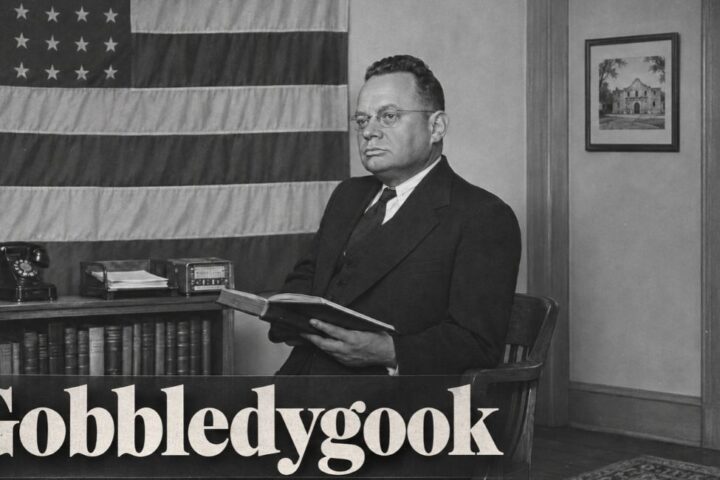
Some American words have exact birth certificates, as with gobbledygook, coined by a Texas congressman in 1944. So long has none. Its first known print appearance is “So Long!”, the closing poem of the 1860 Leaves of Grass, according to the Walt Whitman Archive.
The Online Etymology Dictionary on so long says it surfaced in America and Britain at about the same time, a tangle familiar from why Americans say fall and the British say autumn. Proposed sources vary widely.

- German adieu so lange, the theory etymologists lean toward
- Hebrew shalom, by way of Yiddish sholom
- Swedish så länge, attested from 1850
- Irish slán, “safe,” proposed by the Dictionary of American Slang
- Arabic salaam via sailors, a guess now considered unconvincing
Our verdict is that the German theory looks strongest, but plausible is not proven.
Curiosities
Why Goodbye Outlived the Prayer Inside It
The word goodbye survived because it stopped sounding like a prayer. Speakers fitted it into the good day and good night pattern, and the blessing became a habit.
The same wearing down turned adieu into tschüss and a Venetian pledge of service into ciao. If you want to try any of this, start small.
Say annyeonghi gyeseyo the next time you leave a Korean restaurant, and listen for gaseyo coming back from the staff.
And when someone insists that so long came from sailors saying salaam, you can tell them the dictionaries dropped that goodbye theory long ago.