
My mother worked nights as a nurse at a Pittsburgh hospital for most of my childhood, and she had one prediction she never let go of.
A full moon meant a full waiting room. She would check the kitchen calendar on her way out the door, see the little white circle, and say the night was going to be a long one.
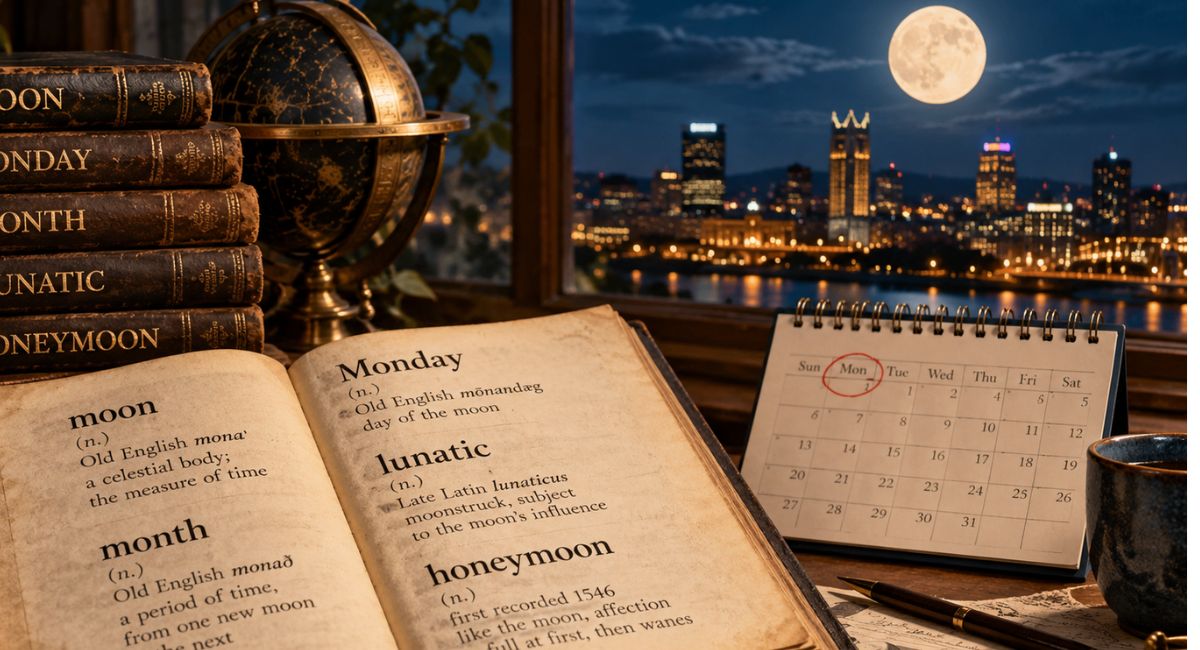
She was repeating a belief older than English itself. The moon sits inside lunatic, but it also hides in Monday, month and honeymoon.
Each word took a different road to get there, and one of them was struck from federal law in 2012.
Monday Is Still the Day of the Moon
Old English called the day mōnandæg (MOH-nahn-dag), soon squeezed to mōndæg. The parts are plain. Mona meant “moon,” and dæg meant “day.”
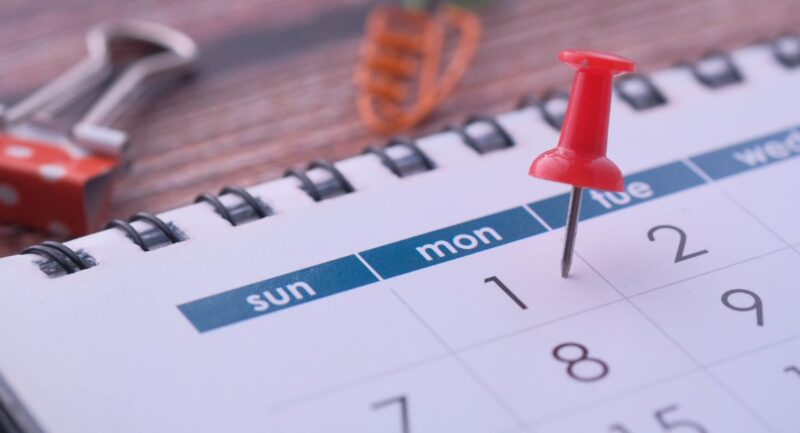
English speakers did not invent the idea. According to the Online Etymology Dictionary entry for Monday, the name is a loan-translation of Late Latin Lunae dies, which itself translated Greek Selēnēs hēmera. Three languages, one idea, each built from its own word for the moon.
A loan-translation, also called a calque, borrows the meaning of a foreign word part by part instead of borrowing its sound. English speakers heard “day of the moon” in Latin and rebuilt it from native Old English pieces, so Monday carries no Latin letters at all.
Middle English writers spelled it monedai. By the time anyone complained about Monday mornings, the moon had already worn smooth inside the word.
One Moon, Two Families of Monday
The same Latin model spread across Europe, but each language family reached for its own moon.
Germanic languages translated, the way English did.
The Romance languages, descended from Latin, simply kept luna.
Here I am working from the Monday entry cited above, not from fluency in any of these languages.
| Language | Monday | Built from |
|---|---|---|
| Old English | mōnandæg | native word for moon |
| German | Montag | native word for moon |
| Dutch | maandag | native word for moon |
| Old Norse | mánadagr | native word for moon |
| French | lundi | Latin luna |
| Italian | lunedì | Latin luna |
| Spanish | lunes | Latin luna |
Moon, Month and the Old Idea of Measuring
The moon was the first calendar most people ever owned, and English still shows it.
The word family reaches back to a Proto-Indo-European root, *me-, meaning “to measure,” because the phases were a measure of time anyone could read from a field.
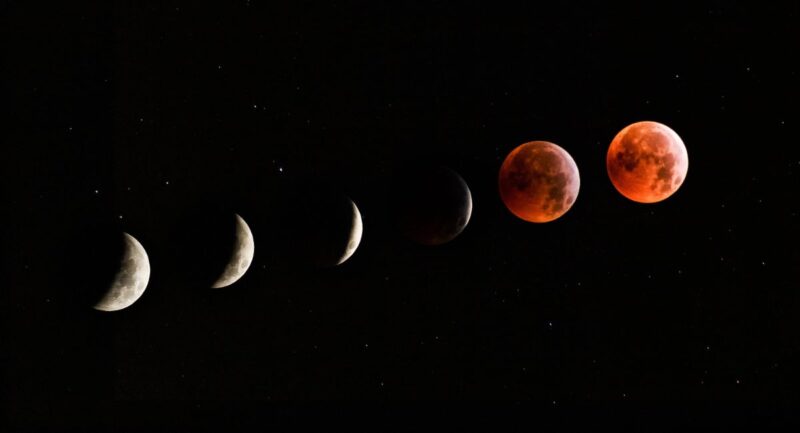
Here are the stops along the way.
- Moon comes from Old English mona, through Proto-Germanic *menon-.
- Month comes from Old English monað, and the etymology entry for month says it first meant the stretch from one new moon to the next.
- In Latin the related word became mensis and meant only “month,” while the moon itself was called luna.
- Menstrual reached English in the late 1300s from Latin menstrualis, “monthly,” built on that same mensis.
A calendar page, in other words, is a moon chart with the moon removed.
Lunatic Arrived in the Late 1200s
Lunatic (LOO-nuh-tik) entered English in the late 13th century, from Old French lunatique or straight from Late Latin lunaticus, “moonstruck.”
The etymology entry for lunatic gives its first sense as periodic insanity that rose and fell with the changes of the moon.
Old English already had its own version, monseoc, “moon-sick.”
The noun, from the late 1300s, first described someone with lucid intervals between bad spells. That detail matters.
The word did not mean permanent madness. It meant a condition that seemed to come and go on a schedule, and the moon was the most visible schedule around.
Readers of the 1611 King James Bible met the word in Matthew 17:15, where a father says his son “is lunatick, and sore vexed.”
The boy falls into fire and water, which is why many modern translations describe seizures instead.
For a look at some of history’s more eccentric figures and extraordinary events, this Deep History video explores how the word “lunatic” is used in stories about the past.
How Lunatic Left Federal Law in 2012

The legal life of the word lasted far longer than its medical one.
English law treated a lunatic as someone who had lost reason, as opposed to someone born without it, and the moon stayed in the definition for centuries.
The road out of American statute took a few dated steps.
- 1760s. Sir William Blackstone defined unsoundness of mind partly through lucid intervals tied to the moon, as a 2005 review in the Canadian Medical Association Journal notes.
- May 2012. The Senate passed S. 2367, the 21st Century Language Act, by unanimous consent.
- December 5, 2012. The House passed it 398 to 1, as PolitiFact confirmed at the time.
- December 28, 2012. The bill became Public Law 112-231, striking “lunatic” from the rules of construction in Title 1 and removing “committee of estates of lunatics” from national bank law.
Does the Full Moon Really Fill the Waiting Room
My mother was in good company. A bright moon gives a hard night something to blame. Researchers have tested it for decades.
The CMAJ review summarizes a 1985 meta-analysis of 37 studies by James Rotton and Ivan Kelly, which found that moon phase explained no more than 1 percent of the variation in so-called lunatic behavior.
Mayo Clinic psychiatrists later counted overnight psychiatric emergency visits across 1,826 nights from 1997 to 2001. In their report in Psychiatric Services, full-moon nights averaged 2.30 patients and other nights 2.32.
Did you know? The moon may affect sleep, even if it does not cause madness. A 2021 University of Washington study tracked 464 Seattle-area students and 98 people in Toba-Qom communities in Argentina. Total sleep swung by 46 to 58 minutes across the cycle and hit its low three to five nights before a full moon.
Loony and the Honeymoon That Wanes
Two more moon words came from opposite moods. Loony first appears in American English in 1853 as a clipped form of lunatic.
The etymology entry for loony adds that the bird called the loon, with its wild cry, probably helped shape it, and loony bin followed by 1909.
Honeymoon is gentler on the surface and gloomier underneath. It is first recorded in a 1546 collection of proverbs by John Heywood. Six years later, the lexicographer Richard Huloet explained the term in his 1552 dictionary as a proverb about newlyweds, whose affection is full at first and then begins to wane, like the moon.

The sweet part came from honey. The warning came from the moon. Modern couples mostly kept the honey and forgot the warning, which may be the happiest case of selective memory in English.
The Stars Left Words Behind Too
Lists of space words in English usually pair the moon with a few star words, and some of those claims are firmer than others. Here is how three common ones hold up against the dictionaries.
The vocabulary of the night sky reaches beyond planets and stars. Even the origin of the word comet goes back to an ancient Greek description of a star with flowing hair.
- Disaster reached English in the 1590s through French désastre, from Italian disastro, “ill-starred.” The etymology entry for disaster ties it to blaming calamity on a bad planetary position.
- Influenza arrived in 1743 from Italian, where it first meant the “influence” of the stars and was used for epidemics by at least 1504.
- Consider is the shaky one. Latin considerare may come from sidus, “star,” but the etymology entry for consider marks that as probable and records scholars who doubt it.
Treat any list that states the star origin of consider as settled fact with a raised eyebrow.
For a closer look at the evidence, our article on words left behind by stargazers traces the origins of disaster, influence, and consider through dated historical sources.
A Full Moon on the Day of the Moon
On Monday, October 26, my mother gets her favorite kind of night.
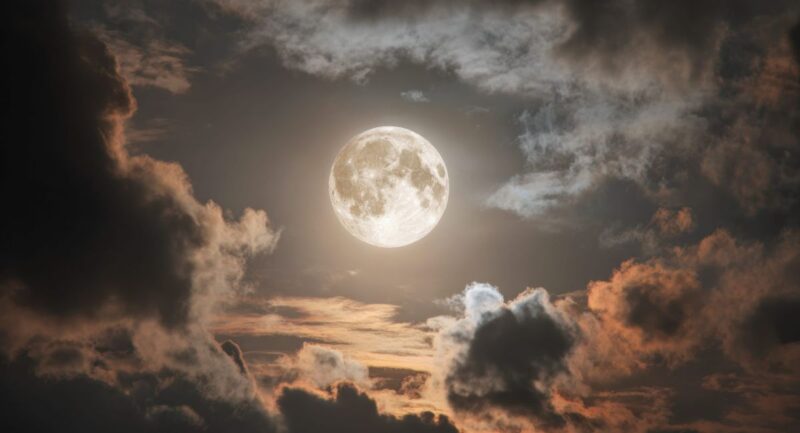
The Hunter’s Moon turns full at 12:12 a.m. Eastern time, which puts a full moon on the day of the moon in Pittsburgh.
Here in Chicago it peaks at 11:12 p.m. on Sunday, so I miss the coincidence by 48 minutes.
She retired years ago, but she will still call that week to ask whether the emergency rooms were busy.
I will mention Rotton and Kelly, and she will remind me that the studies never worked a night shift.