
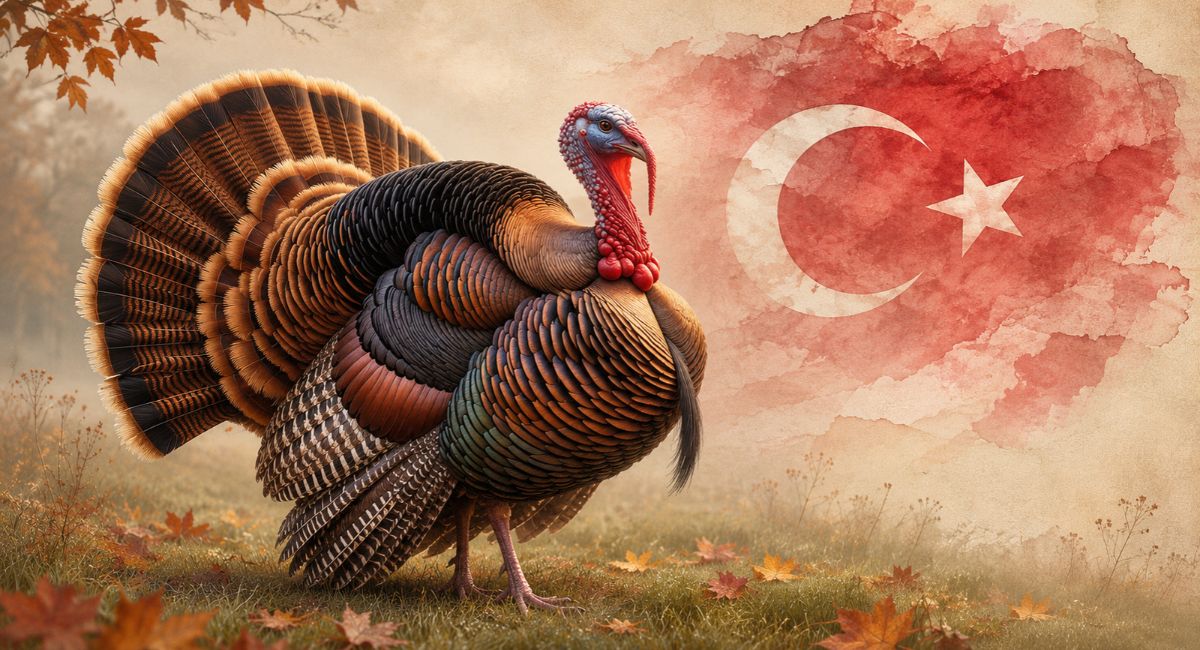
Thanksgiving falls on Thursday, November 26, this year, according to the federal holiday calendar, and the bird on most tables carries the name of a country where it never lived wild. Other languages did no better.
A post from The Language Nerds keeps circulating with the joke that every country names the bird after somebody else.
We traced the English name through dated dictionary entries, French royal records and archaeology, then checked that viral joke line by line.
Most of it holds up well. Two lines need an asterisk, and the real stories behind them are better than the punchline.
View this post on Instagram
The Name Began With a Different Bird
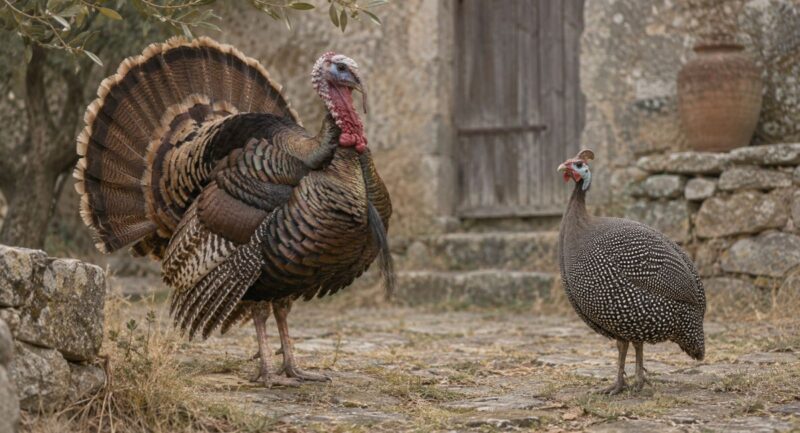
English speakers first gave the name to the guinea fowl, an African bird that reached European markets through lands under Ottoman rule.
Buyers called it a turkey-cock or turkey-hen after the route it traveled, not the place it hatched.
The Online Etymology Dictionary entry for turkey dates the name for the American bird to the 1550s.
Back then, Turkey was a loose label for Asia and the Ottoman lands, and when Spanish ships brought the new bird to Europe, buyers filed it under a name they already owned. Two other habits helped.
- The American bird crossed North Africa, then under Ottoman control, on its way to some European markets.
- Many Europeans blurred the New World with Asia, the same habit that turned maize into “turkey wheat.”
Linnaeus later kept the error alive, giving the American bird the genus name Meleagris, an ancient name meant for the African guinea fowl.
Turkey Reached England Within a Generation of Columbus
The dates show how fast the bird and its borrowed name spread.
We combined dictionary records, French royal accounts and archaeology into one timeline.
| Date | What the record shows |
|---|---|
| 1380 | French royal accounts use poule d’Inde for the guinea fowl |
| 1520 to 1550 | Butchered turkey bones from a feast in Exeter, England |
| 1524 or 1526 | William Strickland is credited with bringing turkeys to England |
| 1550 | Strickland receives a coat of arms showing a turkey-cock |
| 1550s | English applies turkey to the American bird |
| 1573 | Turkey is becoming a usual Christmas main course in England |
The Exeter bones, identified by University of Exeter archaeologists in 2017, are dated by the pottery found beside them.
Other Languages Blamed India, Peru and the Dutch
English was not alone in guessing. Across Europe and Asia, people named the bird after the place they believed had sent it.
India was the favorite guess, and a Dictionary.com explainer on the bird ties that to a period when many Europeans still confused the Americas with India.
- Turkish hindi means “Indian.”
- Portuguese peru appears to come from Peru, used loosely for Spanish America, and Hindi borrowed it as pērū.
- French dinde is short for poule d’Inde, “hen of India.”
- Dutch kalkoen comes from Calicut, a port in India, and Danish and Swedish use related forms.
- Malay ayam belanda means “Dutch chicken.”
The Hindi borrowing and several others turn up in a 2022 discussion on Language Log, the University of Pennsylvania linguistics blog. In our view, the pattern is not random. Each name records a trade route, or a guess about one.
We Fact-Checked the Viral Turkey Joke
The Language Nerds post runs from English through Turkish, Hindi, Arabic, Greek and French, then concludes that nobody wants the bird. We like the joke.
Linguist explores why different languages name the turkey after other countries and how the bird became associated with Türkiye.
Here is how each stop holds up.
- Turkish and Hindi check out as written.
- Arabic is half right. Standard Arabic dīk rūmī means “Roman rooster,” and Rūm was the Arabic name for the Byzantines, so “Greek” is a fair gloss. Levantine Arabic uses dīk al-ḥabaš, “Ethiopian rooster”.
- Greek is disputed. Galopoula comes from gálos, “male turkey,” spelled with one lambda, while Gállos, “Frenchman,” has two. The Greek writer E. Petrou-Poeitou, in a 2013 book on food words, traces gálos to Italian gallo, “rooster.”
- French checks out, with a twist. According to the French national lexical center, Inde in the guinea fowl name first pointed to Abyssinia, today Ethiopia.
The People Who Knew the Bird Named It Plainly
The turkey was a household animal in North America long before any European tasted one.
Ancient DNA from turkey bones and droppings at 38 archaeological sites, dated from about 200 BC to AD 1800, points to at least two separate domestications in precontact North America.
Mexican Spanish still calls the bird guajolote, from the Nahuatl word huehxolotl.
In our reading, it is the only name in this story that comes from people who raised the bird before Europeans arrived, and the only one that does not point somewhere else.
The wild bird is also bigger than many people picture. An adult wild gobbler averages about 18 to 22 pounds, according to the Maryland Department of Natural Resources, and hens run about half that size.
Did you know? Japanese calls the turkey shichimenchō, the “seven-faced bird,” and Korean uses a matching name, chilmyeonjo.
Türkiye Asked the World to Stop Sharing a Name With Dinner
The country has now stepped away from the bird.
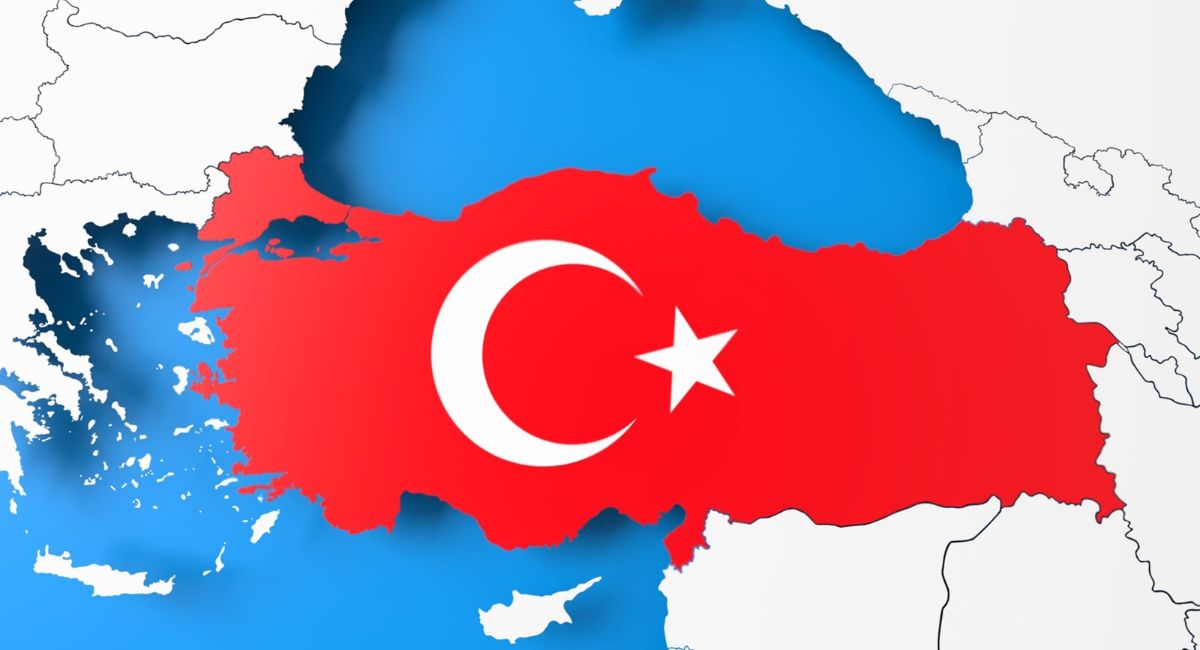
The state broadcaster TRT World argued that an internet search for “Turkey” returns a muddle of country and bird, and it pointed to a dictionary definition of turkey as something that fails badly.
BBC News explains why Turkey began using the name Türkiye and what motivated the change.
We think the request is reasonable. Countries choose their own names, and spelling Türkiye costs English speakers one pair of dots.
Everyday English still says Turkey for the country, and the bird keeps its name either way, so the nearly 500-year-old mix-up is not going anywhere.
What to Say When Someone Shares the Joke
On November 26, someone at the table will probably repeat the line about nobody wanting the bird.
Thanksgiving brings out more than one familiar story about a name. The next day has its own: the origin of Black Friday lies with Philadelphia police and traffic jams, not the retail profits most people associate with it.
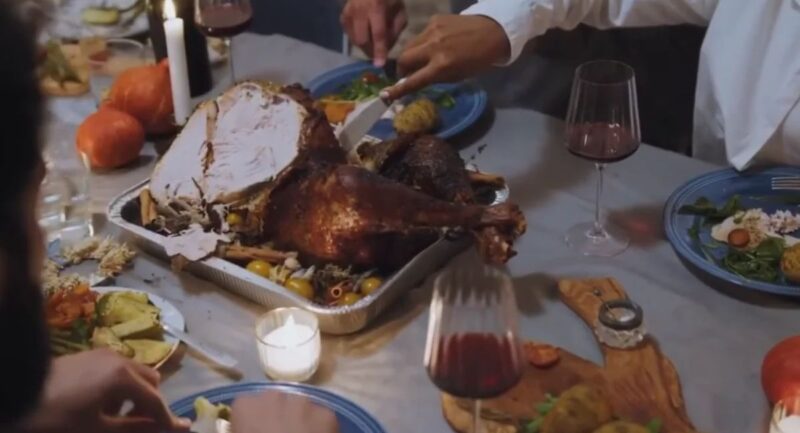
The accurate reply fits between bites. The bird is American, and its English name came from an African guinea fowl sold through Ottoman lands.
The French name started with that same guinea fowl, and the Greek line may owe more to an Italian rooster than to France.
Even the month keeps a name from an older calendar, as our piece on why November is named for nine explains.
For a name with no wrong turns, offer guajolote, the word from the people who first raised the bird.
Frequent Questions About This Topic